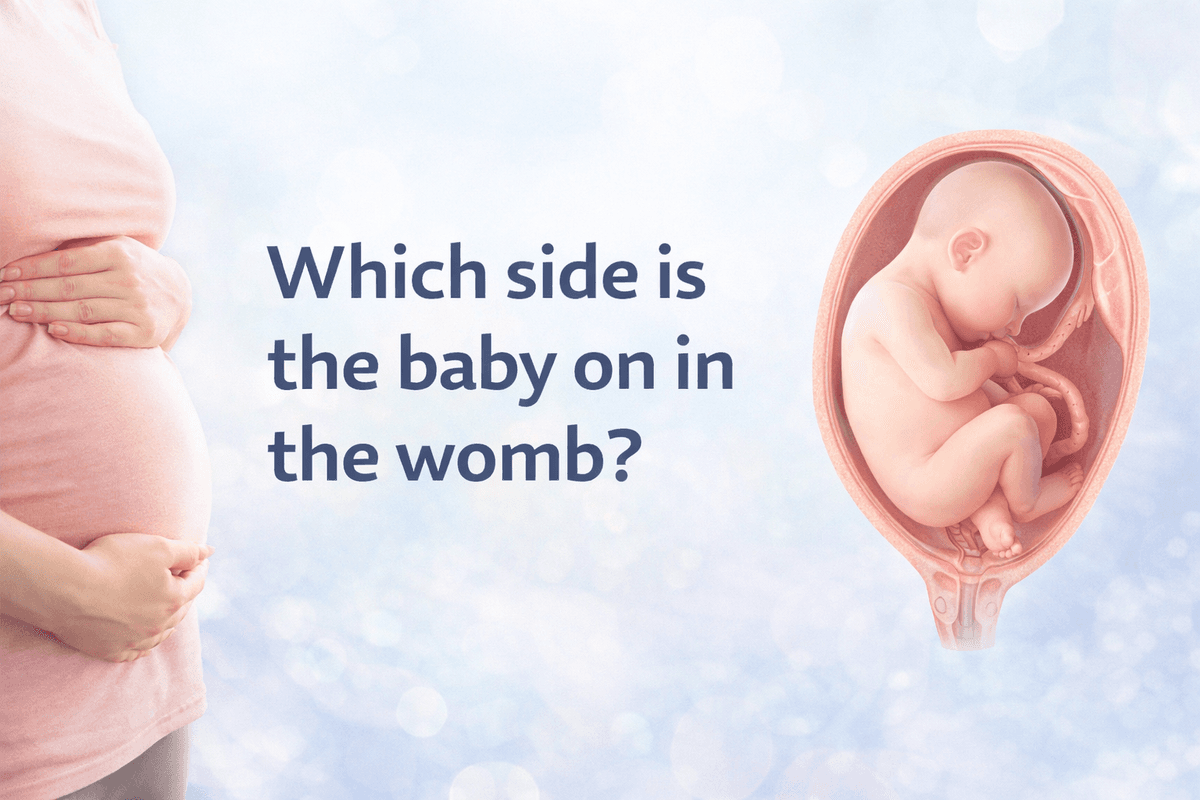
Which side is the baby on in the womb?
Pregnancy brings with it a deep sense of curiosity as expectant parents become more aware of every change happening inside the body. As the baby grows and movements become more noticeable, many parents begin to wonder about the baby position during pregnancy. One of the most common questions asked is, which side is the baby on in the womb? This curiosity often grows stronger as kicks, flutters, and stretches become a daily part of pregnancy.
Understanding the baby position inside womb is not just about curiosity—it helps parents connect with their unborn baby and better understand what their body is experiencing. As pregnancy progresses, mothers often notice that movement seems stronger on one side of the abdomen. This naturally leads to the question, can you feel which side baby is on, or is it something that can only be determined through medical scans?
From a medical standpoint, the fetal position in uterus refers to how the baby is placed inside the womb at any given time. In early pregnancy, the baby has plenty of space and moves freely, changing position often. As a result, the baby may not stay on one side for long. However, as the baby grows and space becomes limited, movements may feel more concentrated on one side, making it seem like the baby has chosen a “preferred” side.
Many expectant mothers rely on physical sensations to guess the baby’s position. Strong kicks on the left or right side of the belly, a bulge appearing on one side, or increased pressure in a specific area can all create the impression that the baby is settled there. While these sensations provide helpful clues, they are not always completely accurate. The uterus is a three-dimensional space, and what is felt on the outside does not always perfectly reflect the baby’s exact placement inside.
This is where medical imaging plays an important role. A baby position scan pregnancy, such as an ultrasound, is the most reliable way to determine where the baby is located in the womb. During these scans, doctors can clearly see the baby’s head, back, limbs, and overall orientation. Ultrasound results help confirm whether the baby is positioned on the left side, right side, centrally, or in a transverse position across the uterus. These scans also help monitor healthy development and prepare for delivery as pregnancy advances.
It is important to note that the baby’s position is not fixed for most of pregnancy. The baby position during pregnancy can change frequently, especially in the first and second trimesters. Babies turn, roll, and adjust as they grow, responding to movements, gravity, and available space. Even in the later stages of pregnancy, some movement and position changes are normal, though they become less dramatic as space decreases.
The desire to know which side the baby is on often stems from a natural instinct to bond and understand what is happening inside the body. Feeling connected to these movements can be reassuring and exciting. While physical sensations may offer hints, only a baby position scan pregnancy can provide a clear and accurate answer.
Understanding Baby Position Inside the Womb
During pregnancy, one of the most fascinating aspects for expectant parents is understanding how the baby is positioned inside the womb. The baby position inside womb refers to where and how the baby is located within the uterus at different stages of pregnancy. This position is not fixed and changes frequently as the baby grows, stretches, and responds to movement, gravity, and available space.
The baby position during pregnancy evolves from week to week. In the early stages, the baby is very small and floats freely in the amniotic fluid. At this time, the fetal position in uterus is constantly changing, and it is nearly impossible to determine which side the baby is on without imaging. Because the baby has ample room to move, they may switch sides several times a day without the mother noticing.
As pregnancy progresses into the second trimester, movements become more noticeable. This is when many mothers start to ask, can you feel which side baby is on? Kicks, rolls, and stretches may feel stronger on one side of the abdomen, giving the impression that the baby prefers that side. However, these sensations can sometimes be misleading. What feels like the baby being on the left or right may actually be the baby’s back, legs, or arms pressing against the uterine wall.
The uterus is a three-dimensional space, meaning that a baby can be positioned slightly sideways, diagonally, or even curled in a way that shifts pressure to one area. This is why understanding the fetal position in uterus requires more than just physical sensation. While movement patterns offer clues, they cannot always accurately pinpoint the baby’s exact location.
Medical imaging provides the most reliable answers. A baby position scan pregnancy, usually performed through ultrasound, allows doctors to see the baby’s orientation clearly. During the scan, healthcare professionals assess the baby’s head position, spine alignment, and overall posture. These scans help determine whether the baby is positioned on the left side, right side, centrally, or lying across the uterus. Ultrasounds are especially useful later in pregnancy when baby position becomes important for delivery planning.
It is also common for babies to favor one side of the womb temporarily. This does not usually indicate a problem. Many factors influence the baby position during pregnancy, including uterine shape, placenta location, the mother’s posture, and even daily activities. For example, if the placenta is located on one side, the baby may position themselves toward the opposite side where there is more space to move.
As the third trimester approaches, the baby begins to settle into a more stable position. While movement continues, large position changes become less frequent due to limited space. At this stage, mothers may more confidently feel where the baby is positioned, but even then, a baby position scan pregnancy remains the most accurate way to confirm placement.
Understanding the baby position inside womb can provide reassurance and help expectant parents feel more connected to their pregnancy journey. It is important to remember that changes in position are a sign of healthy development. Babies move to strengthen muscles, practice reflexes, and prepare for life outside the womb.
In summary, while physical sensations may help answer can you feel which side baby is on, they should not be relied upon alone. The fetal position in uterus is dynamic and influenced by many factors throughout pregnancy. Combining body awareness with medical guidance ensures a clearer understanding and peace of mind for parents as they approach delivery.
How Doctors Determine Which Side the Baby Is On?
Many expectant parents are curious about the baby position during pregnancy, especially when they begin to feel strong movements on one side of the abdomen. This often leads to the question, can you feel which side baby is on, or is it something only a doctor can accurately determine? While a mother’s sensations provide helpful clues, doctors rely on specific medical methods to clearly identify the baby position inside womb.
One of the most common clinical methods doctors use is physical examination through abdominal palpation. During routine prenatal checkups, doctors or midwives gently feel the mother’s abdomen to assess the fetal position in uterus. By identifying the baby’s back, head, and limbs, they can estimate whether the baby is positioned on the left side, right side, or centrally. This technique becomes more accurate as pregnancy progresses, especially in the third trimester when the baby is larger and movements are more defined.
However, abdominal examination has its limitations. The uterus is a three-dimensional space, and factors such as maternal body type, amniotic fluid levels, and placenta location can make it difficult to determine the exact position by touch alone. This is why doctors often rely on imaging for confirmation.
The most accurate and widely used method to determine fetal placement is a baby position scan pregnancy, commonly performed through ultrasound. Ultrasound imaging allows doctors to see the baby’s head, spine, limbs, and overall orientation in real time. Through this scan, healthcare professionals can clearly identify which side of the uterus the baby is occupying and how the baby is positioned inside the womb.
A baby position scan pregnancy is routinely performed during key stages of prenatal care, such as the anomaly scan and later growth scans. These scans not only determine position but also help monitor fetal development, placental placement, and amniotic fluid levels. For parents who are curious or concerned, these scans provide reassurance and clarity.
In many cases, doctors recommend regular ultrasounds in the later stages of pregnancy to track whether the baby has moved into a head-down position in preparation for delivery. During these scans, the fetal position in uterus is carefully documented, as it can influence labor planning and delivery decisions.
For expectant parents seeking advanced imaging, a fetal scan in Bangalore or similar diagnostic centers offers high-resolution ultrasound services conducted by trained specialists. These scans provide detailed insights into the baby position inside womb, making them particularly helpful for high-risk pregnancies or when there are concerns about fetal growth or positioning.
It’s important to understand that while mothers may feel strong kicks or pressure on one side, this does not always indicate the baby’s full position. This is why doctors caution against relying solely on physical sensations to determine placement. While many mothers ask can you feel which side baby is on, medical imaging remains the most reliable method.
Doctors also consider fetal movement patterns, maternal posture, and uterine shape when assessing baby position during pregnancy. Babies often shift positions multiple times, especially in the first and second trimesters. Even in the third trimester, minor adjustments are normal, and doctors monitor these changes closely during prenatal visits.
Common Baby Positions During Early Pregnancy
In the early stages of pregnancy, the baby’s position inside the womb is constantly changing. During the first trimester and the early part of the second trimester, the baby position during pregnancy is highly flexible because the baby is still small and surrounded by plenty of amniotic fluid. At this stage, there is no fixed or permanent baby position inside womb, and the baby can move freely in all directions.
Early pregnancy is often marked by subtle movements that many mothers do not immediately recognize. Because the baby is still developing, most women cannot yet answer the question, can you feel which side baby is on. The movements are usually too gentle and inconsistent to determine whether the baby is positioned on the left, right, or center of the uterus. This is completely normal and does not indicate any concern.
From a medical perspective, the fetal position in uterus during early pregnancy is described more in terms of orientation rather than side. The baby may be curled, floating head-up, head-down, or sideways, and this orientation can change several times a day. Since the uterus is spacious at this stage, the baby does not settle into one particular side.
One of the most common positions during early pregnancy is a central floating position. In this position, the baby is typically located near the middle of the uterus, moving freely in response to the mother’s movements. Another common early position is a sideways orientation, where the baby lies horizontally across the uterus. This position is temporary and usually changes as the baby grows.
Occasionally, the baby may appear to favor one side for short periods. This can happen due to the shape of the uterus, the early placement of the placenta, or natural fetal movement patterns. However, these preferences are not permanent, and the baby position during pregnancy continues to shift frequently in the early weeks.
Because physical sensations are limited at this stage, doctors rely heavily on imaging to determine fetal placement. A baby position scan pregnancy, typically done through an ultrasound, provides a clear view of where the baby is located. During early pregnancy scans, healthcare professionals focus on confirming gestational age, fetal heartbeat, and overall development rather than exact positioning.
For expectant parents seeking advanced diagnostic care, a fetal scan in Bangalore or similar diagnostic centers can offer high-quality ultrasound imaging. These scans help visualize the baby position inside womb and reassure parents that development is progressing normally. However, doctors usually emphasize that early positioning has little clinical significance at this stage.
It’s important to understand that early pregnancy is not the time to worry about which side the baby is on. The fetal position in uterus becomes more relevant later in pregnancy, particularly in the third trimester when the baby begins to prepare for birth. Until then, frequent movement and changing positions are signs of healthy growth and development.
As pregnancy progresses into the second trimester, movements become stronger and more noticeable. This is when mothers may begin to feel consistent kicks or pressure on one side, leading to curiosity about fetal placement. Even then, only a baby position scan pregnancy can accurately confirm positioning.
Left Side vs Right Side: Does It Matter?
As pregnancy progresses and fetal movements become stronger, many expectant mothers begin to notice that kicks and stretches often feel more pronounced on one side of the abdomen. This observation leads to a very common question: does it matter whether the baby is on the left side or the right side of the womb? Understanding the baby position during pregnancy can help clarify whether these differences have any medical significance or are simply a normal part of fetal development.
From a medical standpoint, the baby position inside womb is constantly changing, especially in the first and second trimesters. The baby floats in amniotic fluid and has enough space to move freely. At this stage, it does not matter if the baby appears to favor the left side or the right side. These temporary preferences are influenced by factors such as placenta location, uterine shape, and the baby’s natural movement patterns.
Many mothers ask, can you feel which side baby is on based on movement alone? While physical sensations can provide clues, they are not always reliable indicators of the baby’s exact location. A kick felt on the right side could be from the baby’s legs, while the baby’s back or head may actually be positioned on the left. Because the uterus is a three-dimensional space, sensations on the outside do not always reflect the full fetal position in uterus.
The question of left versus right side becomes more relevant in late pregnancy, but even then, it is not usually a cause for concern. Doctors focus more on whether the baby is head-down, breech, or transverse rather than which side of the uterus the baby is on. The baby position during pregnancy becomes clinically important mainly in the third trimester, when positioning can influence labor and delivery planning.
Medical imaging is the most accurate way to determine fetal placement. A baby position scan pregnancy, typically performed using ultrasound, allows doctors to see exactly where the baby is located and how they are oriented. These scans provide clear insights into the baby position inside womb, including whether the baby is leaning more toward the left or right side. However, doctors generally reassure parents that side placement alone does not impact fetal health.
For expectant parents seeking detailed assessments, a fetal scan in Bangalore or similar advanced diagnostic centers offers high-resolution imaging that accurately maps the fetal position in uterus. These scans are especially useful in high-risk pregnancies or when there are concerns about fetal growth or positioning, but they are not required simply to determine left or right side preference.
There are also many myths surrounding left and right side placement, including claims that one side indicates better blood flow or predicts the baby’s gender. Scientifically, these beliefs have no proven basis. While sleeping on the left side is often recommended for mothers to improve circulation, this does not determine or permanently change the baby’s position.
In reality, it is completely normal for a baby to favor one side of the womb for periods of time. As the baby grows and space becomes limited, movements may feel more concentrated on one side, creating the impression of a fixed position. However, even in the final weeks, babies can still adjust their position slightly.
Why Babies Change Positions Throughout Pregnancy?
One of the most fascinating aspects of pregnancy is how frequently a baby moves and changes position inside the womb. Many expectant parents notice shifting sensations and wonder about the baby position during pregnancy, especially when movements seem stronger on one side than the other. This leads to a common question: why do babies change positions so often, and can you feel which side baby is on as these changes happen?
The baby position inside womb is influenced by growth, available space, and the natural development of muscles and reflexes. In early pregnancy, the baby is very small compared to the size of the uterus. This allows the baby to float freely in the amniotic fluid, changing direction easily. At this stage, the fetal position in uterus is highly flexible, and babies may turn, roll, and stretch multiple times throughout the day.
As the pregnancy progresses into the second trimester, the baby grows stronger and movements become more coordinated. Kicks, twists, and flips are part of normal development as the baby practices muscle control and reflexes. These movements often make mothers feel like the baby is switching sides frequently. However, while you may feel pressure or movement on one side, it doesn’t always mean the baby has completely shifted position.
Another key factor influencing movement is the amount of space available. In the second trimester, there is still enough room for significant movement, but the baby begins to interact more with the uterine walls. This can create the sensation that the baby prefers one side for a period of time. Still, the baby position during pregnancy remains dynamic, and side preferences are usually temporary.
Medical imaging helps clarify these changes. A baby position scan pregnancy, usually performed through ultrasound, allows doctors to track how the baby moves and changes orientation over time. These scans provide a clear picture of the fetal position in uterus, confirming that frequent position changes are normal and healthy. For parents seeking detailed assessments, a fetal scan in Bangalore or similar diagnostic centers can offer advanced imaging and reassurance.
As pregnancy reaches the third trimester, the baby continues to move but with less freedom due to limited space. The baby position inside womb begins to stabilize as the baby prepares for birth. While smaller adjustments still occur, major flips become less common. At this stage, mothers may more accurately sense where the baby is positioned, though even then, physical sensations alone cannot always provide certainty.
Many parents ask can you feel which side baby is on during late pregnancy. While strong kicks or pressure on one side may suggest the baby’s back or limbs are positioned there, doctors emphasize that only imaging can confirm exact placement. This is why regular checkups and ultrasounds are important, especially as delivery approaches.
Factors such as the shape of the uterus, placenta placement, the amount of amniotic fluid, and even the mother’s posture can influence how and where the baby moves. Babies respond to changes in gravity and maternal movement, which explains why movement patterns may vary throughout the day.
Signs That May Indicate Baby’s Position
As pregnancy progresses, many expectant mothers become more aware of their baby’s movements and begin to wonder about the baby position during pregnancy. Strong kicks, rolling sensations, or visible bulges on one side of the belly often raise the question, can you feel which side baby is on? While no physical sign can offer complete certainty, there are several common indicators that may suggest the baby’s general position inside the womb.
One of the most noticeable signs is the pattern of fetal movement. When kicks and stretches consistently occur on one side of the abdomen, it may indicate that the baby’s limbs are positioned in that area. For example, repeated kicks on the right side could suggest that the baby’s legs are facing that direction. However, it’s important to remember that the baby position inside womb is three-dimensional. The baby’s back, head, or limbs may be arranged in a way that creates misleading sensations on the surface.
Another possible sign is the location of pressure or heaviness. Some mothers feel more weight or pressure on one side of the uterus, especially during the later stages of pregnancy. This can occur when the baby’s back or head is resting against that side. While this may offer a clue about the fetal position in uterus, it should not be considered definitive without medical confirmation.
Visible changes in the shape of the abdomen can also suggest positioning. At times, one side of the belly may appear more rounded or firm than the other. This often happens when the baby’s back is pressed outward, creating a noticeable curve. These visual signs may give an idea of the baby position during pregnancy, but they can change as the baby moves.
Some mothers report that certain sleeping or sitting positions make movements more noticeable on one side. Changes in posture can influence how the baby responds, leading to stronger sensations in specific areas. While these experiences may help answer can you feel which side baby is on, they are still influenced by many factors, including amniotic fluid levels and uterine shape.
Medical professionals rely on imaging to confirm these signs. A baby position scan pregnancy, typically done through ultrasound, provides the most accurate information about fetal placement. Ultrasound imaging allows doctors to clearly see the baby’s head, spine, and limbs, offering a precise understanding of the fetal position in uterus.
For expectant parents seeking detailed insights, a fetal scan in Bangalore or similar diagnostic centers offers high-quality imaging services. These scans not only confirm the baby position inside womb but also assess overall fetal health and development. Doctors often recommend such scans if there are concerns about growth, movement patterns, or preparation for delivery.
It’s important to note that these signs can change frequently. Babies move often, especially in the first and second trimesters, and even in late pregnancy, minor position shifts are normal. This is why doctors advise against relying solely on physical sensations to determine position.
Baby Position in the Second Trimester Explained
The second trimester is often considered the most comfortable phase of pregnancy, and it is also the time when many mothers first become clearly aware of their baby’s movements. As kicks, flutters, and rolls become more noticeable, curiosity about the baby position during pregnancy naturally increases. This is when many parents begin asking, can you feel which side baby is on, especially if movements seem stronger on one side of the abdomen.
During the second trimester, typically from weeks 13 to 27, the baby grows rapidly but still has plenty of room to move inside the uterus. At this stage, the baby position inside womb is not fixed. The baby can turn, stretch, flip, and rotate freely, changing orientation multiple times a day. Because of this flexibility, it is common for the baby to appear on different sides at different times.
From a medical perspective, the fetal position in uterus during the second trimester is described more by orientation—such as head-up, head-down, or sideways—rather than a permanent left or right side placement. Babies often move in response to maternal movements, sounds, or changes in posture. This explains why kicks may feel stronger in certain positions or at specific times of day.
Many mothers notice that movements during the second trimester feel lighter and more flutter-like compared to the stronger kicks of later pregnancy. These sensations can sometimes make it difficult to determine exact placement. While physical awareness increases, the answer to can you feel which side baby is on is still not always clear. Movements felt on one side may reflect the baby’s limbs rather than the baby’s overall position.
Doctors rely on imaging to monitor fetal placement during this stage. A baby position scan pregnancy, usually performed during routine ultrasound examinations, provides a clear view of the baby’s orientation. These scans allow healthcare professionals to see how the baby is positioned and confirm that development is progressing normally. However, doctors often reassure parents that second-trimester positioning is not critical unless other concerns are present.
For expectant parents seeking advanced diagnostic care, a fetal scan in Bangalore or similar centers offers detailed ultrasound imaging. These scans provide valuable insights into the baby position inside womb, placental location, and fetal growth. While these scans can determine which side the baby is on at that moment, doctors emphasize that the position is likely to change again.
Another factor influencing baby position during pregnancy in the second trimester is placenta placement. If the placenta is located on the front (anterior placenta) or on one side, movements may feel stronger in certain areas. This can create the impression that the baby prefers a specific side, even though the fetal position in uterus continues to shift.
As the second trimester progresses toward the third, the baby gradually begins to settle. While major position changes still occur, movements become more coordinated and predictable. This transitional phase sets the stage for the baby’s eventual head-down position closer to delivery.
Baby Position in the Third Trimester: What to Expect
The third trimester marks the final stage of pregnancy and brings important changes in the baby position during pregnancy. As the baby grows larger and space inside the uterus becomes limited, movements begin to feel stronger yet more contained. During this stage, many expectant parents become especially curious about the baby position inside womb, wondering whether the baby has settled on a particular side and what that might mean for delivery.
By the start of the third trimester, typically around week 28, the fetal position in uterus begins to stabilize. While the baby may still move, roll, and adjust slightly, major position changes become less frequent. Most babies gradually turn into a head-down position as they prepare for birth. This position is considered ideal for vaginal delivery, but it does not always mean the baby is centered in the uterus. The baby may still favor the left or right side.
At this stage, many mothers ask, can you feel which side baby is on? In the third trimester, physical sensations are often more reliable than earlier in pregnancy. Strong kicks on one side, pressure under the ribs, or a firm bulge on one side of the abdomen may indicate where the baby’s back or limbs are positioned. However, even in late pregnancy, these sensations do not always reflect the baby’s exact orientation.
Medical assessment becomes increasingly important in the third trimester. A baby position scan pregnancy, usually performed through ultrasound, allows doctors to confirm whether the baby is head-down, breech, or in another position. These scans also help determine how deeply the baby’s head is engaged in the pelvis and whether the baby is positioned more toward the left or right side of the uterus.
For expectant parents seeking detailed evaluation, a fetal scan in Bangalore or similar diagnostic centers provides high-resolution imaging that clearly shows the baby position inside womb. These scans are especially useful if there are concerns about fetal growth, reduced movement, or delivery planning.
It’s also common for mothers to feel increased pressure on one side of the abdomen in the third trimester. This can happen when the baby’s back rests against one side of the uterus while the limbs extend toward the opposite side. While this may suggest a side preference, doctors focus more on the overall fetal position in uterus rather than which side the baby leans toward.
Factors such as placenta location, uterine shape, and maternal posture can influence how the baby settles. Babies may respond to gravity and movement, which is why position changes can still occur, especially before week 36. After this point, the baby usually remains in a stable position until delivery.
Is It Normal for the Baby to Stay on One Side?
Many expectant mothers notice that their baby’s movements seem concentrated on one side of the abdomen and begin to wonder if this is normal. This observation often leads to questions about the baby position during pregnancy, especially when kicks and pressure feel consistent on either the left or right side. A common concern is whether it’s healthy for the baby position inside womb to appear unchanged for long periods.
In most cases, it is completely normal for a baby to seem like they are staying on one side. The fetal position in uterus can be influenced by many natural factors, including the shape of the uterus, placenta placement, and how much space is available as the baby grows. While the baby continues to move, those movements may feel stronger in certain areas depending on how the baby is oriented.
Many mothers ask, can you feel which side baby is on based on movement alone? While repeated kicks on one side may suggest that the baby’s limbs are facing that direction, it does not necessarily mean the baby’s entire body is fixed there. The baby’s back may be resting against one side of the uterus, making movements more noticeable on the opposite side. Because the uterus is a three-dimensional space, physical sensations can sometimes be misleading.
As pregnancy advances, especially into the third trimester, the baby position during pregnancy becomes more stable due to limited space. At this stage, babies often settle into a head-down position in preparation for birth. Once settled, they may lean slightly toward one side, creating the impression that they are staying in one place. This is usually a sign that the baby is comfortable and developing normally.
Medical professionals rely on imaging to assess whether this positioning is healthy. A baby position scan pregnancy, typically performed using ultrasound, provides a clear view of the fetal position in uterus. These scans allow doctors to confirm that the baby’s orientation is appropriate for the stage of pregnancy and that there are no concerns affecting development or delivery.
For parents seeking detailed evaluation, a fetal scan in Bangalore or similar diagnostic centers offers high-quality imaging services. These scans help determine whether the baby’s position is normal and whether any adjustments are needed as delivery approaches. Doctors often recommend scans if there are concerns about reduced movement, discomfort, or unusual positioning.
It’s also important to understand that babies respond to maternal posture and movement. When a mother sits, sleeps, or stands in certain positions, gravity can influence how the baby settles. This can make the baby seem consistently located on one side. However, even when the baby appears settled, subtle movements continue inside the womb.
When should staying on one side be a concern? If there is a sudden decrease in movement, persistent pain, or discomfort associated with fetal positioning, it is important to consult a healthcare provider. While a stable baby position inside womb is usually normal, any noticeable changes in movement patterns should be evaluated.
Can a Mother’s Sleeping Position Affect Baby’s Side?
As pregnancy progresses, many expectant mothers become more conscious of their sleeping habits and how these might influence their baby. A common question that arises is whether a mother’s sleeping position can affect the baby position during pregnancy, particularly which side of the womb the baby seems to prefer. When movements are felt more strongly on one side, it’s natural to wonder, can you feel which side baby is on, and whether sleep posture plays a role.
From a medical perspective, the baby position inside womb is influenced primarily by fetal development, uterine shape, placenta placement, and available space. However, a mother’s posture—including sleeping position—can have a temporary impact on how movements are felt and where the baby settles for short periods. This is especially noticeable during the second and third trimesters when the baby is larger and movements are stronger.
Sleeping on the left side is often recommended during pregnancy because it improves blood flow to the uterus and placenta. While this position benefits maternal circulation, it does not permanently determine the fetal position in uterus. However, it can influence how the baby responds to gravity. When a mother lies on her left side, the baby may shift slightly to adjust, creating the sensation that the baby is positioned more toward that side.
Many mothers ask, can you feel which side baby is on while sleeping or resting. While certain positions may make movements more noticeable on one side, this does not necessarily mean the baby has fully changed position. The baby’s back, head, or limbs may press against the uterine wall differently depending on the mother’s posture. These changes are usually temporary and resolve once the mother changes position.
Doctors rely on medical imaging to determine whether sleeping habits have influenced fetal placement. A baby position scan pregnancy, performed through ultrasound, provides an accurate picture of the baby position inside womb regardless of maternal posture. These scans show whether the baby’s orientation has changed or if the perceived side preference is simply due to how movements are felt.
For expectant parents seeking detailed assessments, a fetal scan in Bangalore or similar diagnostic centers offers advanced ultrasound imaging. These scans help confirm the fetal position in uterus and provide reassurance that sleeping positions have not caused any harmful effects. Healthcare providers often remind parents that babies naturally move and adjust throughout the day.
It’s important to understand that while sleeping positions can influence comfort and circulation, they do not force the baby into a fixed side. Babies respond to a variety of stimuli, including sound, movement, and maternal activity, which all play a larger role than sleep posture alone. The baby position during pregnancy continues to change naturally until later stages when the baby begins to settle for birth.
If a mother notices reduced movement or discomfort associated with certain sleeping positions, it’s advisable to consult a healthcare provider. While changes in sensation are normal, any sudden or significant changes should be evaluated. A baby position scan pregnancy can help clarify whether the baby’s placement is appropriate for the stage of pregnancy.
Medical Terms Used to Describe Baby Position in the Womb
When expectant parents ask which side the baby is on, healthcare professionals often use specific medical terms to describe the baby position during pregnancy. These terms help doctors communicate clearly about the baby’s orientation, movement, and readiness for birth. Understanding this medical language can help parents better interpret scan results and prenatal discussions.
The baby position inside womb is described using a combination of terms that refer to the baby’s orientation, direction, and relationship to the uterus. One of the most commonly used terms is fetal position, which refers to how the baby’s body parts are aligned within the uterus. The fetal position in uterus is not static and can change throughout pregnancy.
Another key term is fetal lie. Fetal lie describes the relationship between the baby’s spine and the mother’s spine. The three main fetal lies are longitudinal (baby aligned vertically), transverse (baby lying sideways), and oblique (baby at an angle). During most of pregnancy, these positions can change freely, which is why many parents ask can you feel which side baby is on but receive different answers over time.
Fetal presentation is another important term, especially as delivery approaches. Presentation refers to the part of the baby that is positioned to come out first during birth. Common presentations include cephalic (head-first), breech (bottom or feet first), and shoulder presentation. While presentation becomes crucial in late pregnancy, it does not necessarily indicate which side of the womb the baby is leaning toward.
Doctors also use terms like left occiput anterior (LOA) or right occiput anterior (ROA). These describe the position of the baby’s head in relation to the mother’s pelvis. LOA means the back of the baby’s head is facing the mother’s left front side, while ROA means it is facing the right front side. These terms provide precise detail about the baby position during pregnancy, especially when planning delivery.
Medical imaging plays a key role in identifying these positions. A baby position scan pregnancy, typically performed using ultrasound, allows doctors to visualize the baby’s orientation clearly. These scans show not only the baby’s side placement but also the lie, presentation, and head position. For parents seeking detailed diagnostic imaging, a fetal scan in Bangalore or similar centers provides high-resolution views of the baby position inside womb.
It’s important to note that while these medical terms are precise, they may not always align with what a mother physically feels. Sensations such as kicks or pressure may lead parents to wonder can you feel which side baby is on, but physical sensations alone cannot fully explain the fetal position in uterus. This is why healthcare providers rely on scans rather than symptoms.
Another term often mentioned is engagement, which refers to how far the baby’s head has moved into the pelvis. Engagement usually occurs in the later stages of pregnancy and is an important sign of readiness for labor. However, engagement does not always indicate whether the baby is on the left or right side.
When Baby’s Position Becomes Important for Delivery?
Throughout pregnancy, the baby moves freely inside the womb, and changes in position are a normal part of development. However, as the due date approaches, the baby position during pregnancy becomes more than just a topic of curiosity—it plays a crucial role in determining how labor and delivery may proceed. Understanding when and why positioning matters can help expectant parents feel more prepared and informed.
In early and mid-pregnancy, the baby position inside womb is flexible and constantly changing. During this time, doctors are not concerned about whether the baby is on the left side or the right side. Instead, attention shifts to positioning in the third trimester, particularly after week 32, when the fetal position in uterus begins to stabilize as space becomes limited.
One of the most important aspects doctors look for is whether the baby has moved into a head-down position, also known as cephalic presentation. This position is ideal for vaginal delivery and allows the baby to move smoothly through the birth canal. While parents may wonder can you feel which side baby is on, healthcare providers focus more on head position rather than side placement.
To assess readiness for delivery, doctors use a baby position scan pregnancy, usually performed through ultrasound. This scan helps confirm whether the baby is head-down, breech, or lying sideways. It also shows how deeply the baby’s head has engaged in the pelvis and whether the baby is leaning toward one side. These details are important for planning labor and identifying potential challenges early.
For expectant parents seeking detailed evaluations, a fetal scan in Bangalore or similar diagnostic centers offers advanced imaging that clearly shows the baby position inside womb. These scans are particularly helpful if the baby has not settled into a head-down position by the later weeks of pregnancy or if there are concerns about pelvic space or placental placement.
The side the baby favors—left or right—can influence the progression of labor, but it is usually less critical than head orientation. For example, babies positioned with their back toward the mother’s front often move through labor more efficiently. However, many babies adjust their position during labor itself, and slight variations in the fetal position in uterus are usually manageable.
Some parents ask can you feel which side baby is on to predict how labor will unfold. While pressure, movement patterns, or belly shape may offer clues, these signs are not reliable indicators of delivery readiness. Medical assessment remains the most accurate way to determine whether the baby’s position is optimal.
If the baby remains in a breech or transverse position late in pregnancy, doctors may recommend exercises, external cephalic version (a procedure to turn the baby), or discuss delivery options such as cesarean section. These decisions are guided by findings from a baby position scan pregnancy, not by physical sensation alone.
Myths and Facts About Baby Position in the Womb
Pregnancy is often surrounded by advice, beliefs, and stories passed down through generations. Many of these ideas focus on the baby position during pregnancy, especially when it comes to determining which side the baby is on. While some beliefs sound convincing, not all of them are supported by medical science. Understanding the myths and facts can help parents make informed decisions and avoid unnecessary worry.
Myth 1: You can always tell which side the baby is on by feeling kicks.
Many parents believe that strong kicks on one side mean the baby is fully positioned there. This leads to the common question, can you feel which side baby is on? In reality, while movement patterns provide clues, they are not always accurate. The baby position inside womb is three-dimensional, and what feels like a side preference may actually be the baby’s limbs moving while the back or head rests elsewhere.
Fact: Physical sensations alone cannot accurately determine the fetal position in uterus. Only medical imaging can provide a clear picture of fetal placement.
Myth 2: A baby staying on one side means something is wrong.
Some believe that if the baby appears to stay on one side for a long time, it indicates a problem. This concern often arises in later pregnancy when movements feel concentrated.
Fact: It is completely normal for a baby to favor one side temporarily, especially in the third trimester when space is limited. The baby position during pregnancy naturally becomes more stable as delivery approaches, and side preference alone is not a sign of concern.
Myth 3: Sleeping position determines the baby’s side.
There is a common belief that sleeping on one side forces the baby to move to that side of the womb.
Fact: While maternal posture may temporarily affect how movements are felt, it does not permanently change the fetal position in uterus. Doctors confirm positioning through a baby position scan pregnancy, not through sleeping habits.
Myth 4: Left or right side predicts the baby’s gender.
Some myths claim that the baby’s side placement can predict whether it’s a boy or a girl.
Fact: There is no scientific evidence linking gender to the baby position inside womb. Gender can only be determined through medical tests such as ultrasound or genetic screening.
Medical professionals rely on imaging for accurate assessment. A baby position scan pregnancy, usually done through ultrasound, provides real-time visuals of the baby’s orientation, head position, and movement. For parents seeking advanced diagnostic care, a fetal scan in Bangalore or similar centers offers detailed insights into the fetal position in uterus and overall fetal health.
Myth 5: Baby position never changes late in pregnancy.
Some believe that once the baby settles into a position, it remains fixed until birth.
Fact: While major changes become less common in late pregnancy, babies can still make small adjustments. The baby position during pregnancy may continue to shift slightly, even close to delivery.
When to Consult a Doctor About Baby Position?
Throughout pregnancy, it is natural for parents to be curious about the baby position during pregnancy, especially as movements become stronger and more frequent. Many expectant mothers try to interpret kicks, rolls, and pressure points and ask, can you feel which side baby is on? While curiosity is normal, there are certain situations where it becomes important to consult a doctor to ensure that the baby position inside womb is healthy and appropriate for the stage of pregnancy.
In most cases, changes in movement and positioning are completely normal. Babies move freely in early pregnancy, and even in the second trimester, frequent shifts in the fetal position in uterus are expected. However, as pregnancy progresses into the third trimester, doctors pay closer attention to positioning because it can influence delivery planning.
One of the key reasons to consult a doctor is if there is a noticeable reduction or sudden change in fetal movement. If movements become significantly weaker or less frequent, it may indicate that the baby’s position has changed or that further evaluation is needed. While many parents wonder can you feel which side baby is on, changes in movement patterns are more important to monitor than side placement alone.
Persistent discomfort or pain on one side of the abdomen is another reason to seek medical advice. While pressure and stretching sensations are normal, ongoing pain could be related to the fetal position in uterus, ligament strain, or other pregnancy-related issues. A healthcare provider can assess whether the baby position during pregnancy is contributing to discomfort or if additional care is required.
Doctors also recommend consultation if the baby does not appear to settle into a head-down position by the later weeks of pregnancy, typically around week 36. At this stage, a baby position scan pregnancy is often performed to confirm whether the baby is head-down, breech, or in another position. Early identification allows doctors to discuss options such as monitoring, exercises, or delivery planning.
Medical imaging is the most reliable way to assess fetal placement. A baby position scan pregnancy, usually done via ultrasound, provides a clear view of the baby position inside womb. For parents seeking advanced diagnostic services, a fetal scan in Bangalore or similar centers offers high-quality imaging and expert interpretation. These scans help determine whether positioning is within normal limits and whether any intervention is needed.
Another important time to consult a doctor is if there are risk factors such as multiple pregnancies, low amniotic fluid, placenta issues, or previous delivery complications. In these cases, close monitoring of the baby position during pregnancy is essential to ensure both maternal and fetal safety.
It’s also worth consulting a healthcare provider if physical sensations do not align with scan results. Many parents believe they know exactly where the baby is based on movement, but the baby position inside womb may differ from what is felt. Doctors can clarify these differences and provide reassurance.
Final Thoughts: Is Knowing the Baby’s Side Really Important?
As pregnancy unfolds, curiosity about every movement and sensation is completely natural. Many expectant parents closely observe kicks, stretches, and pressure points, trying to understand the baby position during pregnancy. This often leads to the question, can you feel which side baby is on, and whether that knowledge has any real importance beyond curiosity.
Throughout most of pregnancy, knowing which side the baby is on is not medically critical. In the early and middle stages, the baby position inside womb changes frequently as the baby grows, moves, and responds to its environment. During these stages, babies have plenty of space to turn, roll, and shift positions, making side placement temporary and ever-changing. Focusing too much on left or right placement during this time can create unnecessary worry.
From a medical standpoint, doctors are more concerned with the overall fetal position in uterus rather than the side the baby favors. Key factors include whether the baby is head-down, breech, or lying sideways, especially as delivery approaches. These orientations play a significant role in labor planning and delivery safety, whereas side placement alone usually does not.
Many parents believe they can accurately determine positioning based on physical sensations. While it’s common to feel stronger movements on one side, the answer to can you feel which side baby is on is not always straightforward. The uterus is a three-dimensional space, and sensations on the surface may reflect the baby’s limbs rather than the baby’s overall position. This is why physical awareness, though valuable for bonding, is not a reliable diagnostic tool.
Medical imaging provides clarity and reassurance. A baby position scan pregnancy, typically performed using ultrasound, offers a clear and accurate picture of the baby position inside womb at any given time. These scans help healthcare providers assess not only positioning but also growth, amniotic fluid levels, and placental placement. For expectant parents seeking detailed insights, a fetal scan in Bangalore or similar diagnostic centers offers advanced imaging and expert evaluation.
It’s also important to remember that babies continue to make small adjustments even in late pregnancy. While the baby position during pregnancy becomes more stable in the third trimester, slight shifts are still normal. Doctors monitor these changes closely during routine prenatal visits to ensure everything is progressing safely.
So, is knowing the baby’s side really important? In most cases, the answer is no. While curiosity about positioning is natural and part of the pregnancy experience, side placement rarely impacts fetal health or delivery outcomes. What truly matters is consistent movement, healthy development, and proper medical monitoring.
In summary, while many parents ask can you feel which side baby is on, the focus should remain on overall well-being rather than exact side placement. Understanding the fetal position in uterus through a baby position scan pregnancy, such as a fetal scan in Bangalore, provides accurate information when it truly matters. By trusting medical guidance and enjoying the journey, parents can approach childbirth with confidence, reassurance, and peace of mind.